
A balanced approach to technology in EUSD classrooms 
Educational technology and screen time are something that students, staff, and families are talking about everywhere. The challenge is no longer how to incorporate technology into classrooms, but how to use it more thoughtfully. As educators, we strive to ensure students develop the digital skills they need for the future while keeping meaningful, hands-on learning and collaboration at the center of their educational experience.
At Encinitas Union School District (EUSD), finding that balance has been an ongoing focus for many years. Technology can provide valuable opportunities for students to research, create, practice skills, and access learning in new ways. At the same time, some of the most meaningful learning happens away from a screen through discussion, collaboration, hands-on exploration, writing, problem-solving and connection with teachers and peers.
As part of the District’s annual LCAP process, EUSD seeks feedback from parents, teachers and students on a variety of topics, including technology use. That feedback helps shape district priorities, guide adjustments and inform planning for the future. With that feedback in mind, this year, the district has further strengthened its educational technology practices, creating greater consistency across its nine elementary schools and clearer expectations for when and how devices are used.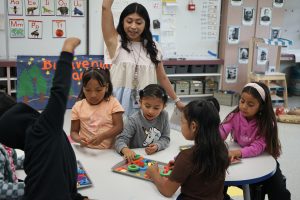
Students now participate in no more than three 20–30 minute technology sessions per day, totaling no more than 60 minutes spread out throughout their day. Devices remain at school, digital homework has been eliminated across all grade levels, and iPads stay off student desks unless they are actively being used for instruction. Technology is also not used to fill free time, as a classroom reward, or for entertainment.
Beyond reducing screen time, the district is focused on ensuring that technology use is purposeful and supports meaningful learning. Devices in our classrooms support targeted math and reading instruction, research, projects, writing and typing, as well as periodic benchmark assessments that provide teachers with valuable information about student progress. Our guiding principle is that technology should enhance learning, not replace meaningful instruction.
Creating a thoughtful approach to technology also means ensuring that when students are using devices, they are doing so in a safe and responsible environment. Teachers can use Apple Classroom to monitor and manage iPads during instruction, while all school devices include Lightspeed content filters and are monitored through Bark and Lightspeed alerts, including 24/7 human monitoring. Before receiving their school-issued iPad, students also complete a Responsible Use Agreement with their teacher to ensure they understand expectations for appropriate device use and the consequences for misuse.
That commitment to safety also includes giving students the knowledge and skills to navigate the digital world responsibly. EUSD recently adopted a K–6 digital citizenship curriculum through Common Sense Media, with students exploring topics such as digital well-being, media literacy, digital footprints, online identity, and responsible technology use throughout the year. Students in grades 2–6 also learn how to find, evaluate, and responsibly use information, research skills that are becoming increasingly important in an ever-changing digital world.
As technology continues to evolve, education must evolve with it, but that does not mean more technology is always better. For EUSD, innovation includes finding the right balance with all available tools, not just digital. By listening to families, educators, and students, the district is working to prepare children for an increasingly digital future without losing the hands-on experiences, relationships, creativity, and curiosity that are essential to how children learn.