
The multihyphenate workforce
A friend recently shared a story about a young restaurant employee who arrived for his shift and immediately searched for food and a moment to decompress. To some coworkers, it looked lazy or entitled. But what they didn’t know was that he spent his days helping care for his mother and five younger siblings. He had barely eaten all day because every dollar went toward supporting his family. That free shift meal wasn’t indulgence or lack of effort. It was his survival. Taking a moment to regulate himself before starting work wasn’t weakness; it was emotional intelligence.
What looked like disengagement from the outside was actually adaptation. What looked like avoidance was actually regulation. And what looked like a lack of discipline was, in reality, a young person navigating layers of responsibility most coworkers never saw.
Perhaps the most misunderstood shift in young professionals today is emotional awareness.
And this is where the conversation about young professionals often gets missed entirely.
What we are reading as inconsistency is often a different operating system entirely. Young professionals are not avoiding work. They are recalibrating how they function within it. They are learning to manage energy, protect mental capacity, and operate in systems that don’t always account for the increasing complexity of modern life.
That mindset shows up clearly in Carlsbad’s emerging workforce.
According to the City of Carlsbad’s Economic Development team, more than 50,358 residents age 25 and older hold a bachelor’s degree or higher. Among residents ages 25 to 39 alone, over 10,000 hold bachelor’s degrees. Within that same 25 to 39 age group, roughly 4,711 hold degrees in science and engineering, about 2,891 in arts, humanities, and other fields, and around 1,500 in business.
At first glance, that might look like a standard educated workforce. But structurally, it tells a more surprising story: Carlsbad is not producing a single-track, business-first pipeline. It is producing a hybrid one, engineers who think like designers, creatives who understand systems, analysts who communicate like storytellers, and professionals who move fluidly between disciplines.
The most valuable skill in Carlsbad’s next generation of leaders isn’t technical expertise, creativity, or business knowledge, it’s the ability to integrate all three.
That integration shows up in how careers are being built. The traditional ladder is giving way to the multihyphenate professional. A marketing coordinator is also a content creator. A software engineer is also a founder. A designer is also a consultant.
Young professionals are no longer asking how to fit into one role, they are actively building across several at once.
It also shows up in how they communicate. Raised in digital ecosystems, they understand that authenticity travels further than polish. They instinctively know how to build attention, trust, and community through storytelling, humor, and transparency in ways traditional marketing often struggles to replicate.
In many cases, they are not learning how to “do” marketing, they are redefining how influence works entirely.
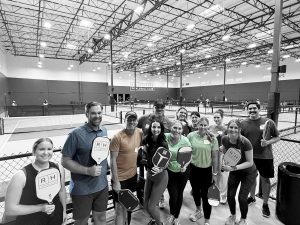
We are also seeing a shift in how connection happens professionally. Networking is no longer confined to conference rooms or structured mixers. Sober wellness events, run clubs, creator gatherings, and wellness raves are becoming new professional ecosystem spaces where relationships are formed through novel experience rather than forced interaction.
I want to return to that restaurant story, because it is not an exception. It is a signal.
Young professionals are learning to operate in a world where performance, identity, work, and wellbeing are all happening at once, no longer in sequence. And instead of asking why they don’t fit old systems more neatly, the better question might be what those systems are missing. Instead of asking, “Why don’t young employees work the way we used to?” perhaps leaders should ask different questions:
Are we creating workplaces people can sustainably succeed in?
Are we offering different accomodations for neurodiversity?
Are we rewarding appearances of productivity over actual innovation?
Are we making room for employees to bring their full skill sets, not just their job titles?
Are we listening closely enough to understand what they are actually responding to?
What if the next generation isn’t lowering the standard of work, but redefining what a more integrated, human version of success looks like?
This year, as we celebrate Carlsbad’s Top 40 Under 40, the real story isn’t just what they have achieved. It’s what they are modeling about where work is already going. The only question left is whether you’re willing to get on board.